For the Jain community, few places carry as much weight as Shikharji. Tradition holds that 20 of the 24 Tirthankaras—the supreme teachers of Dharma attained moksha (liberation) on this single mountain, making it the most sacred site in all of Jainism. The hill takes its name from Parshvanatha, the 23rd Tirthankara, who is believed to have attained liberation here.
The name Sammed Shikharji translates loosely to ‘peak of concentration’, a fitting description for a mountain devoted almost entirely to meditation and pilgrimage. Locally, the Santhal community also regards the hill as sacred, knowing it as Marang Buru. For a pilgrim setting out from Madhuban, the climb is less a trek and more a passage through layers of spiritual history, with shrines appearing long before the summit itself comes into view.
The name Sammed Shikharji translates loosely to ‘peak of concentration’, a fitting description for a mountain devoted almost entirely to meditation and pilgrimage. Locally, the Santhal community also regards the hill as sacred, knowing it as Marang Buru. For a pilgrim setting out from Madhuban, the climb is less a trek and more a passage through layers of spiritual history, with shrines appearing long before the summit itself comes into view.
Parasnath Hill Height: The Roof of Jharkhand
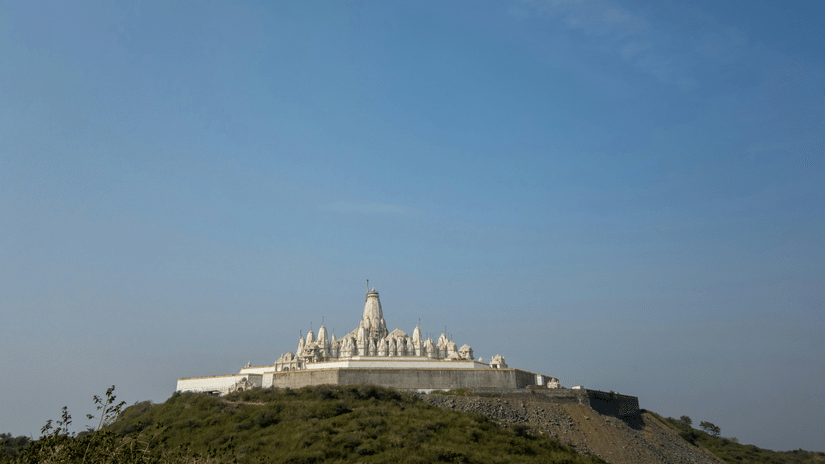
At 1,365 m (4,478 ft), Parasnath Hill is the highest point in Jharkhand and one of the loftiest peaks in eastern India. The elevation is part of what makes the pilgrimage physically demanding, particularly on the exposed upper stretches of the ridge where the tree cover thins out. Despite the altitude, the climb is accessible to most fit adults, and for pilgrims who cannot walk the full distance, a doli (a litter carried by local bearers) is available from the base.
The hill is home to dozens of shrines collectively known as the Parasnath Temple complex, ranging from small hilltop tonks to larger marble structures with centuries of history behind them. Svarna Bhadra Koot sits on the highest point of the range and is visible from several points along the ascent, while Parshvanatha Tonk marks the exact spot where the 23rd Tirthankara is said to have attained liberation. Jal Mandir, positioned along the ridge, doubles as a rest-and-prayer checkpoint for pilgrims mid-climb.
Closer to the base, Bhaktamara Temple in Madhuban is dedicated to one of Jainism's most widely recited devotional hymns, and the nearby Nichli Temple is an 18th-century structure that still anchors the pilgrimage staging area. A short distance away in the Palganj valley stands an idol believed to be roughly 2,500 years old, adding another layer of history to an already ancient landscape.
Closer to the base, Bhaktamara Temple in Madhuban is dedicated to one of Jainism's most widely recited devotional hymns, and the nearby Nichli Temple is an 18th-century structure that still anchors the pilgrimage staging area. A short distance away in the Palganj valley stands an idol believed to be roughly 2,500 years old, adding another layer of history to an already ancient landscape.

31 Tonks and the Climb to the Summit
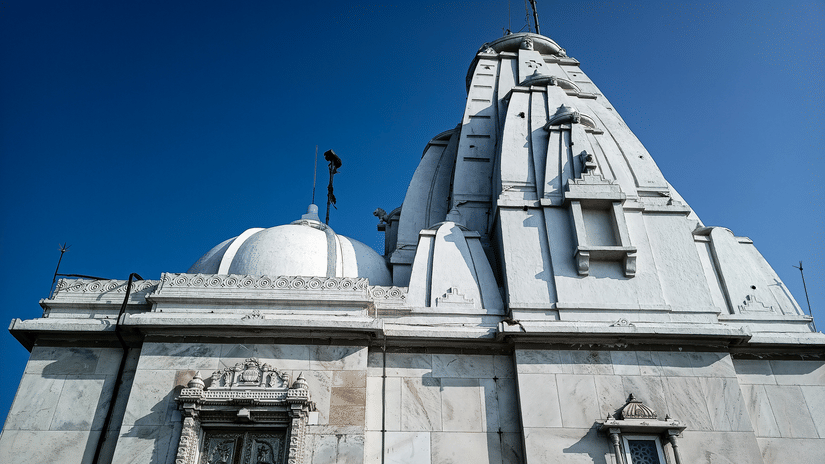
The heart of the pilgrimage is a chain of 31 tonks—small hilltop shrines built from white marble, spread horizontally along the summit ridge rather than stacked along the ascent. Each tonk houses a paduka, a carved footprint impression, commemorating the Tirthankara or spiritual guide believed to have attained liberation at that exact spot. From Madhuban, the initial climb to the ridge covers roughly 9 km on a paved concrete track, passing through forested slopes with the Gandharva Nala stream running alongside sections of the lower trail.
Devotees who undertake the full parikrama (circumambulation) cover the tonks in a traditional sequence across a route of about 27 km round trip, including the ascent, the horizontal loop across the ridge, and the descent back to Madhuban. Because of the distance and the need to finish before nightfall, most pilgrims begin the climb around 2:00 AM. 2 routes lead to the ridge: the Northern Approach via Madhuban, which is paved, well supported with rest stops and doli services, and used by the vast majority of pilgrims; and the steeper, quieter Southern Approach via Isri/Nimiaghat, which suits experienced trekkers looking for a more rugged climb with fewer crowds.
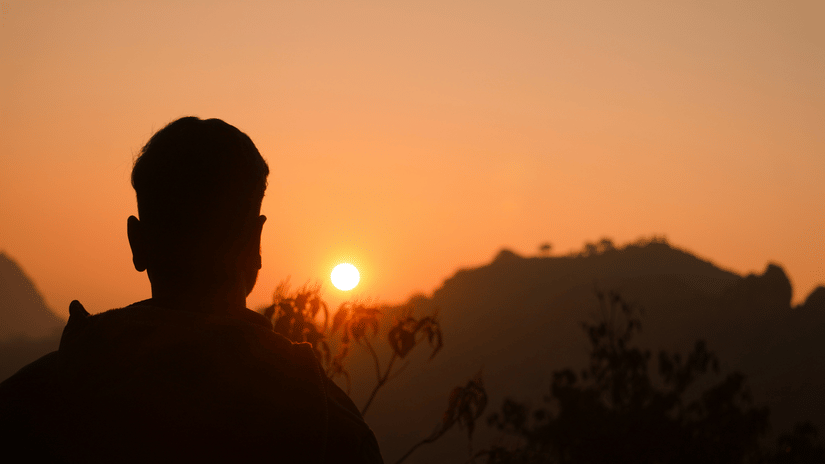
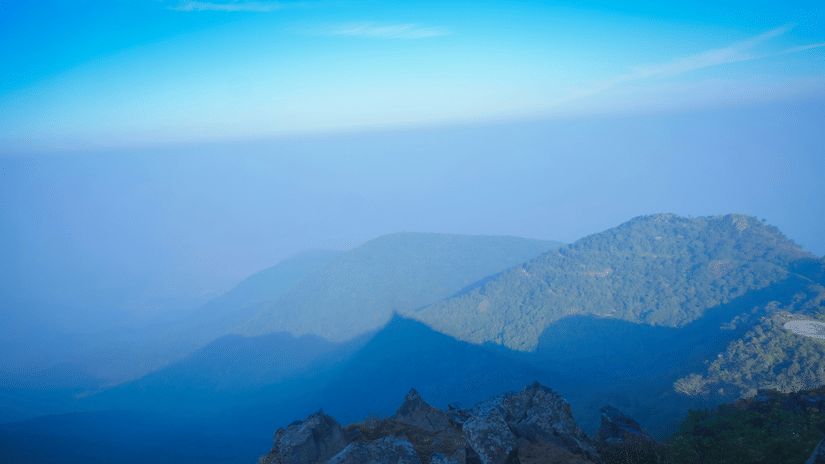
Every pilgrimage to the summit begins in Madhuban Parasnath, the small town at the foot of the hill that serves as the starting point for trekkers and devotees alike. Pilgrims traditionally open their climb with prayers at the base shrines here before setting off up the track, and it is also where most people carrying traditional offerings—rice, sandalwood, dhupa, flowers, and diya—stock up before the ascent. Beyond its role as a staging point, Madhuban has its own quiet charm, with markets selling handcrafted souvenirs and religious artefacts, simple vegetarian eateries, and dharamshalas offering overnight stays for pilgrims arriving the evening before their climb.
- Winter (October - March): Daytime temperatures of roughly 10-22°C make this the most comfortable window for the climb, the reason most guides point to it as the best time to visit Sammed Shikharji.
- Summer (April - June): Temperatures push up to around 35°C, with little shade on the exposed upper ridge at midday.
- Monsoon (July - September): Heavy rain turns the concrete track slippery and cuts visibility along the ridge.
- Peak Pilgrimage Season (November - February): Major Jain festivals and organised yatra groups concentrate their visits here, so Madhuban's dharamshalas and bhojnalayas run at full capacity.
- For Lighter Footfall: Late October or early March offers pleasant weather with fewer crowds than the peak festival weeks.
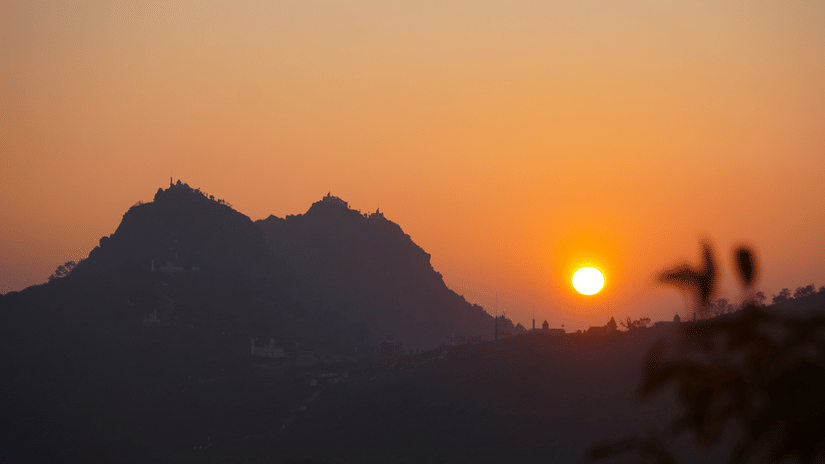
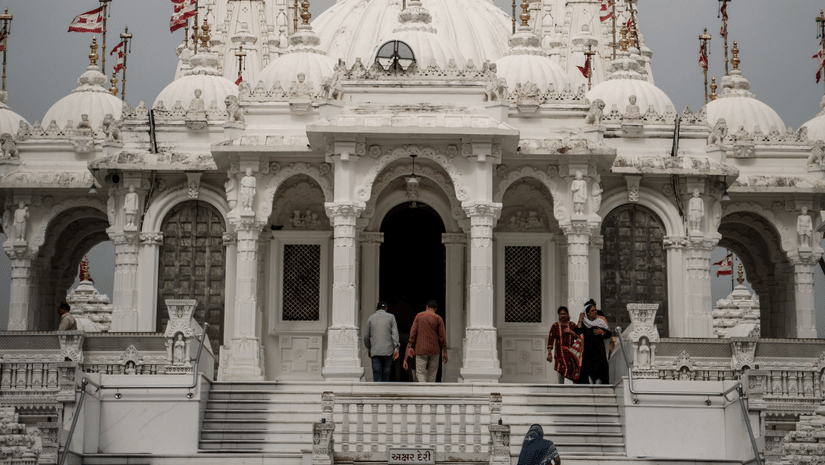
- Visit the sacred temples and tonks spread across the ridge, each tied to a Tirthankara believed to have attained moksha at that spot.
- Walk the traditional pilgrimage route from Madhuban to the summit, one of the more significant spiritual journeys in the Jain faith.
- Take in the mountain views along forested slopes, ridgelines, and open viewpoints overlooking the surrounding valleys.
- Photograph the landscape, with early mornings and clear days offering the best light on the temples and the ridge.
- Sit with the atmosphere: the chants, the steady flow of pilgrims, and the quiet of the trail
- Explore Madhuban's markets for souvenirs and religious artefacts, and sample the simple vegetarian meals served at the local bhojnalayas.
- By Road: The Dhanbad to Parasnath distance works out to approximately 80 km by road via NH 19, the fastest and most direct route, with the drive typically taking about 3 hours depending on traffic. Private cabs, rental cars, and regular bus services all run between Dhanbad and Madhuban, so travellers can choose whichever suits their schedule.
- By Train: Train travellers can alight at Parasnath Railway Station (PNME), served by frequent trains on the Howrah-Delhi main line as well as regional routes connecting Kolkata, Patna, and Ranchi. The distance by road from Parasnath station to Parasnath Hill is roughly 24 km to Madhuban, the base village, and local taxis and shared transport are readily available outside the station for this last stretch.

- From Madhuban: Once at Madhuban, the walking distance from Parasnath Hill to the summit ridge is about 9 km one way on a paved track, a climb that most fit trekkers complete in about 4 hours depending on pace, with the full round-trip parikrama running closer to 27 km for pilgrims covering all 31 tonks.
- By Air: For travellers arriving from further afield, Ranchi's Birsa Munda Airport lies roughly 160 km away with daily domestic connections from major Indian cities, while Gaya Airport, about 160 km away via NH 19, is a useful option for those combining the trip with a visit to Bodh Gaya.
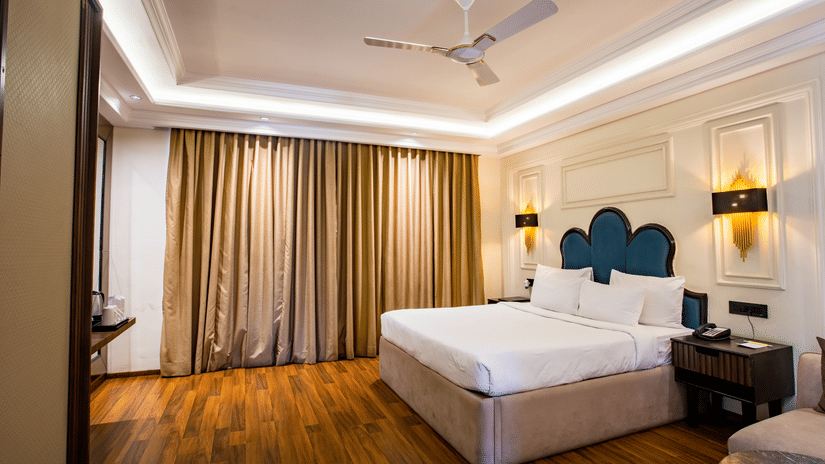
Choose from 96 well-appointed accommodations, including Deluxe Rooms, Executive Rooms, Suites, and Luxury Villas, with several offering private pools—ideal for families and solo pilgrims seeking a comfortable retreat after a demanding day on the trail. The multi-cuisine restaurant serves North Indian, Thai, Chinese, and international dishes, while the poolside café offers lighter meals and evening relaxation. Guests can unwind with the swimming pool and jacuzzi, while expansive lawns, a children’s play area, and event spaces cater to families, groups, and pilgrims travelling together. The travel desk can also arrange cabs, drivers, or guides for the onward journey to Parasnath Hill, making the trip more convenient from start to finish.